
Herndon, VA · Garage Door Service
Garage Doors on Houses Built Before Insulation Rules Caught Up
Herndon's housing runs 1938 to 2015, median 1981 - right at the line where insulation codes changed. Here's what that means for your garage door.
- Repairs & new doors
- Springs & openers
- Serving 4 nearby communities
What Most People Get Wrong
Most homeowners figure a drafty garage door just needs new weatherstripping around the bottom. That fixes gaps, but it doesn't touch the bigger problem: if the house went up before insulation standards tightened, the door panel itself was never built with a foam core. It's a single sheet of steel or a slab of wood with nothing behind it. You can seal every edge perfectly and the door will still radiate cold straight into the garage, because the material has no R-value to speak of.
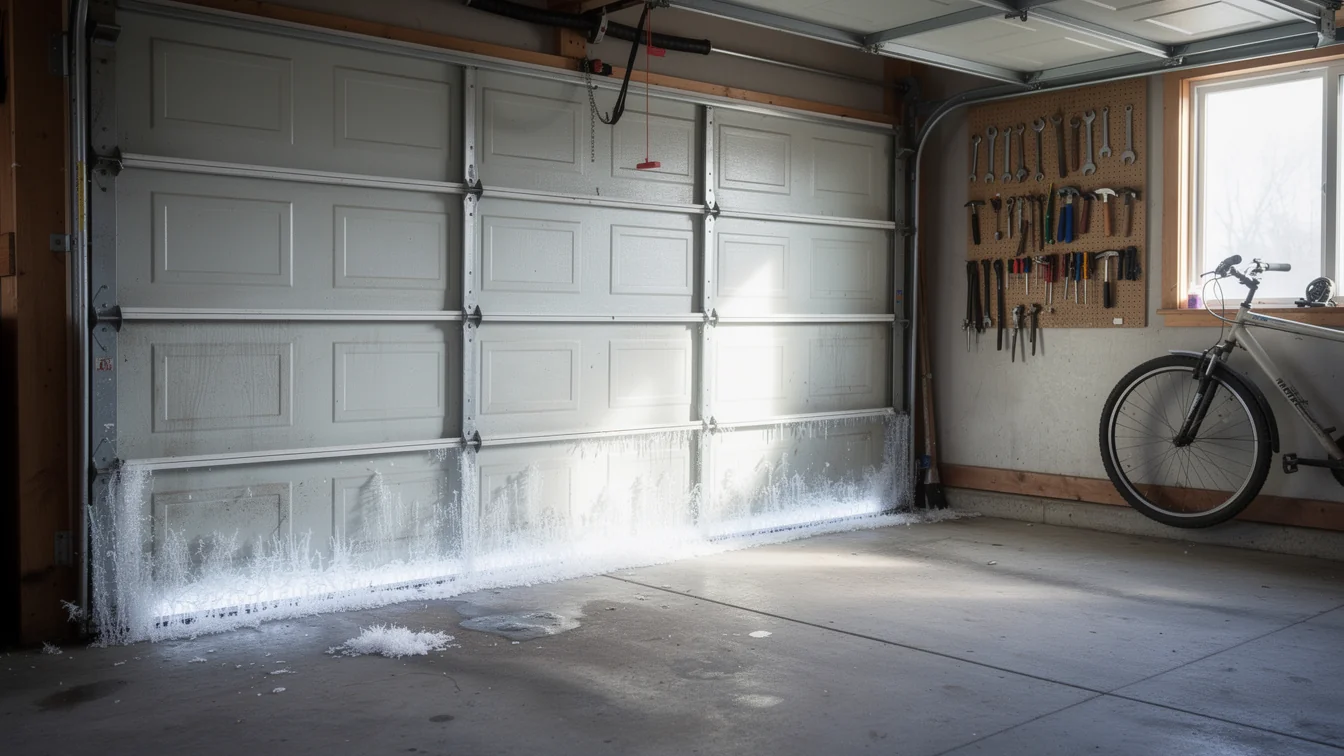
With a median build year of 1981 in this area, a lot of doors we look at predate the push toward insulated panels that became standard later. Owners replace the opener, replace the springs, even replace the bottom seal, and still can't figure out why the garage stays cold enough to crack a bottle of something left on the shelf overnight. The door itself is the issue, not the hardware around it.
The other mistake: assuming a newer-looking door means it's insulated. Plenty of replacement doors installed on older houses over the decades are still single-layer steel, because that's what was cheap and available at the time. Age of the house and insulation value of the door on it don't always match.
The Situation
Housing in this part of the region spans 1938 to 2015, with the median landing at 1981 - which puts a huge share of these houses right at the boundary where energy codes started requiring better building envelopes, garage doors included. The broader stock runs mostly 1980s and '90s construction across the named communities nearby, from Great Falls and Wolf Trap a few miles out to Brambleton, Arcola, and Dunn Loring further off.
That 1981 median matters because it's close enough to the code shift that you get real variation house to house, even on the same street. One place built in 1975 likely has an original single-skin door, possibly the original opener too. A neighbor's house from 1988 may have come with an early insulated panel, or may not - insulated doors weren't universal that fast. We can't tell you which your house has without looking at it, but the build era is a strong clue, and if you know roughly when your house went up, that's the first thing worth checking before you call anyone.
When to Call Someone
Call if the garage is noticeably colder than it should be for the season, if you see condensation beading on the inside of the door panel, or if the door has visible dents and warping - thin uninsulated steel dents easily and a bent panel won't track straight no matter how good the opener is.
Don't call us expecting a quick insulation retrofit kit to fix an old single-skin door. Foam-and-panel retrofit kits exist, but on a door built before insulated construction was common, the panel often isn't designed to hold a kit well, and the hardware wasn't sized for the added weight. In most of those cases, replacing the door with a built-insulated one is the honest answer, not patching the old one. That's the limitation worth knowing up front: we'd rather tell you that than sell you a kit that underperforms in a year.
If your door is original to a house from the earlier end of that 1938-2015 range, get it looked at before a spring or cable fails on it - old steel doesn't fail gracefully.
How Local Conditions Play In
This area sits in a cold, severe climate band, which means real freeze-thaw cycling through the winter months. An uninsulated door doesn't just let heat out - it lets that cold cycle straight through to anything stored against the garage wall, and on attached garages, into the house itself through the shared wall.
Severe cold also stiffens springs, thickens old grease on tracks, and makes a door that was marginal in October noticeably harder to lift by January. On a house built in the earlier decades of that 1938-2015 range, the original torsion hardware was sized for a lighter, non-insulated panel. If someone swapped in a heavier insulated door later without upgrading the springs to match, the opener strains and the door can start dropping unevenly. That combination - older house, newer heavy door, old springs - is one of the more common mismatches we find on service calls in this climate.
Frequently asked questions
How do I know if my garage door is insulated?
Knock on it. A hollow, tinny sound usually means single-layer steel with nothing behind it. An insulated door sounds dull and feels heavier for its size. If your house was built well before insulated doors became standard, assume it's uninsulated until you check, especially if the door looks original.
Can I just add insulation to my old door instead of replacing it?
Sometimes, with a foam-panel kit, but it depends on the door's construction and the opener's lift capacity. On older single-skin doors from before insulated designs were common, the added weight can overload the springs and opener. We'd rather check the hardware first than sell a kit that fails in a year.
Does the cold really affect garage door springs that much?
Yes. In a severe cold climate, metal contracts and old grease stiffens, so a spring that was already near the end of its life often fails in winter rather than summer. If your door has felt harder to lift the last few cold mornings, that's worth a call before it snaps.
Related garage door services in Herndon
More garage door guides
Book garage door service in Herndon
Call now or request a quote - tell us what the door is doing and where you are.