Herndon, VA · Garage Door Service
Buying a Replacement Door in Herndon: Start With the Opening, Not the Catalog
Herndon homes built mostly between 1938 and 2015 have odd-sized openings and cold-climate stress on doors. Here's what to check before you buy a replacement.
- Repairs & new doors
- Springs & openers
- Serving 4 nearby communities
What Most People Get Wrong
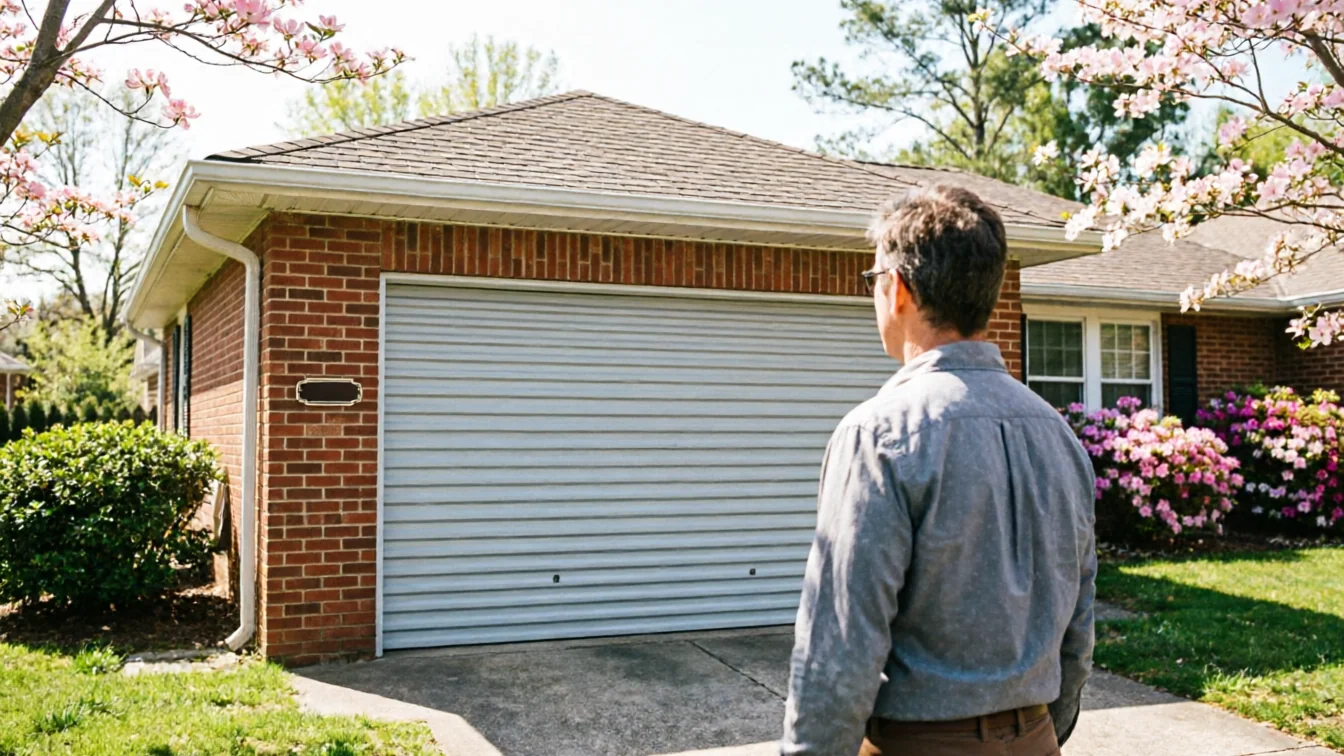
Most people start by picking a door style off a website, then find out it doesn't fit. Houses in this area were built anywhere from 1938 to 2015, with the median landing around 1981, and a lot of that 1980s builder-grade construction used garage openings that don't match today's standard 16-by-7 size. You measure for a new door the same way you'd measure for a new window - exact, not approximate, because a half-inch off on an 80s-era frame means custom trim or a jamb repair nobody budgeted for.
The other mistake is buying on price alone. A cheap single-layer steel door looks fine in the showroom and then dents the first time a kid's bike taps it, or warps under a hard freeze-thaw cycle. Given that median household income across this service area runs $153,370, most owners here aren't buying the bargain door anyway - but plenty still get talked into one because nobody explained the difference between a hollow panel and an insulated one before the invoice showed up. Ask what's inside the skin before you ask what color it comes in.
The Situation
This service area covers roughly 131,069 households, with about 49,510 of those being owner-occupied houses - the kind with an actual garage door to replace, not a shared structure. The housing stock skews toward that 1980s-90s build-out across the thirty-some named communities here, which means a wave of original doors and openers from that era are now 35 to 45 years old. That's past the point where parts are easy to find and well into the point where the door itself, not just the spring or opener, is the thing wearing out.
When a door from that generation fails, you're often not comparing repair-versus-replace on a like-for-like basis. The track spacing, the spring mount, even the header clearance can be nonstandard compared to what's sold today. That's not a defect in the house - it's just what building practice looked like forty years ago. It does mean a straight swap isn't always possible, and a qualified look at the opening before you order anything saves a second trip.
When to Call Someone
Call before you buy if the door is original to a house built in that 1938-2015 window and you don't know which end of it your home falls on. An opening sized for a 1980s single-car door won't take a modern double-track kit without framing work, and that's a conversation worth having before the door arrives, not after.
Also call if the symptoms point past the door itself - a track that's pulled away from the jamb, a bent panel that won't sit flush, or an opener straining audibly on cold mornings. In a climate classed as cold-severe, a struggling opener in January is often a spring that's lost tension from repeated freeze cycles, not a motor that needs replacing. Diagnosing that over the phone doesn't work; it takes someone standing in front of the actual door.
One honest limit here: replacement doors in less common widths or with specific insulation ratings can take longer to get in than the standard sizes. If your opening is nonstandard for this housing stock, expect the lead time to reflect that, not a same-week install.
How Local Conditions Play In
The cold-severe climate band this area sits in is hard on uninsulated doors and the hardware that runs them. Steel contracts in deep cold, torsion springs lose a measurable amount of lift in winter, and a door that worked fine in October can bind or sag by February. That's a real factor when you're choosing between a basic panel and an insulated one - it's not an upsell, it's the climate doing what it does here every year.
It also matters where your house falls relative to others in this stretch of Virginia. Homes near Great Falls, five miles out, or Wolf Trap, six miles out, share that same 1980s-vintage construction wave, which means similar opening sizes and similar age-related failures. Farther out toward Clifton or Haymarket, at 13 and 17 miles, you're more likely to see a wider mix of build years, since F1 covers a long span, 1938 through 2015. None of that changes how a door is measured or installed, but it's useful context if you're comparing notes with a neighbor a few miles over and wondering why their door problem looked nothing like yours.
Frequently asked questions
Will a new garage door just bolt onto my old opening?
Not always. A lot of houses here were built in the 1980s and 90s with openings sized differently than today's standard. The track, spring mount, and header clearance can all differ from what a modern kit assumes, so the opening needs to be measured and checked before you order, not after it arrives.
Does the cold around here actually affect the door, or is that overstated?
It's real. This area sits in a cold-severe climate band, and steel panels and torsion springs both respond to hard freeze-thaw cycles. A door that runs fine in fall can bind, sag, or strain the opener by midwinter, which is why insulation and spring condition matter more here than in a milder climate.
How long does it take to get a replacement door if mine is a nonstandard size?
Standard sizes move quickly. Less common widths or specific insulation ratings, which show up more often on older 1980s-era openings, take longer to source. If your house falls into that category, plan on a longer lead time than a same-week turnaround.
Related garage door services in Herndon
More garage door guides
Book garage door service in Herndon
Call now or request a quote - tell us what the door is doing and where you are.